
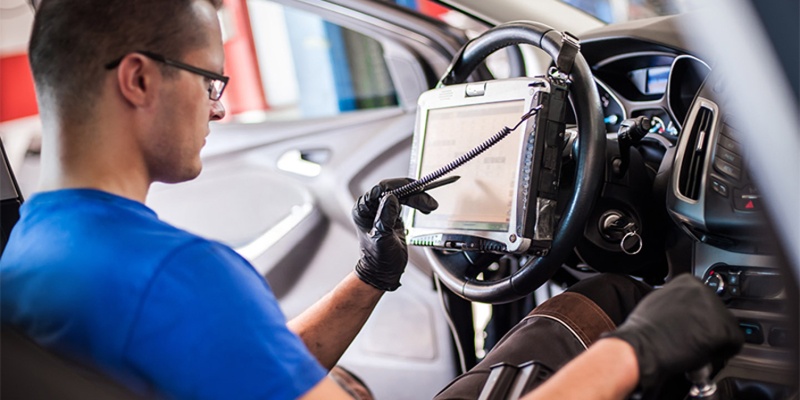
How does an onboard diagnostic tool work? What is the working principle? What are the essential onboard diagnostic tools? Does the diagnostic require mastery of our technology? How to view and analyze diagnostic results? When is a diagnostic necessary?
Car diagnostic tools are essential devices used to assess the health and performance of a vehicle. These tools help mechanics, technicians, and even car owners to detect issues in various components of a car, including the engine, transmission, and electronic systems. Modern vehicles are equipped with onboard computers that store diagnostic information, which can be accessed using specialized diagnostic tools.
This article will explain how car diagnostic tools work, their working principles, the necessary tools and technology for diagnostics, how to interpret diagnostic results, and when a car should undergo diagnostics.
How Do Car Diagnostic Tools Work?
Car diagnostic tools work by connecting to a vehicle’s onboard diagnostics (OBD) system, which collects and stores information about the vehicle’s performance. The OBD system monitors various sensors and electronic components, continuously checking for faults and malfunctions.
When a problem is detected, the OBD system generates a diagnostic trouble code (DTC) and stores it in the vehicle’s computer. A car diagnostic tool reads these codes and provides detailed information about the issue, helping technicians diagnose and fix problems efficiently.
Working Principles of Car Diagnostic Tools
Car diagnostic tools operate based on the OBD system, which is divided into two main versions: OBD-I and OBD-II.
-
OBD-I (Onboard Diagnostics I)
Introduced in the 1980s, OBD-I was the first system used for vehicle diagnostics.
It used manufacturer-specific diagnostic ports and had limited standardization.
Data retrieval required specialized scanners for each vehicle brand.
-
OBD-II (Onboard Diagnostics II)
Introduced in 1996, OBD-II became a universal standard for all vehicles.
It provides real-time data and standardized diagnostic codes.
The OBD-II port, usually located under the dashboard, allows easy connection with diagnostic tools.
Car diagnostic tools communicate with the vehicle’s Engine Control Unit (ECU) via the OBD-II port, extracting fault codes and providing detailed reports about the vehicle’s condition.
Tools and Technology Needed for Diagnostics
-
Essential Car Diagnostic Tools
OBD-II Scanner – A device used to read and clear trouble codes from the OBD system.
Diagnostic Software – Computer programs that analyze and interpret diagnostic data.
Multimeter – A tool used to measure voltage, resistance, and current in electrical circuits.
Oscilloscope – Helps in analyzing electronic signals from sensors and components.
Smoke Machine – Used for detecting leaks in the intake system, exhaust, and vacuum lines.
-
Technologies Used in Car Diagnostics
CAN Bus (Controller Area Network) – A communication system that allows different car components to interact.
Bluetooth & Wireless OBD Scanners – Allow wireless communication with smartphones or tablets.
AI-Based Diagnostics – Advanced software that uses artificial intelligence to predict failures.
How to Read and Analyze Diagnostic Results
-
Retrieve Trouble Codes (DTCs)
Use an OBD-II scanner to extract codes from the ECU.
-
Interpret Code Meanings
Cross-reference codes with a database to understand their meaning.
-
Check Live Data
Analyze real-time sensor data, including fuel mixture, RPM, and temperature.
-
Perform Further Testing
Use additional tools like multimeters and oscilloscopes for deeper analysis.
-
Fix Issues and Clear Codes
Once the problem is fixed, erase the codes and retest.
When Should a Car Be Diagnosed?
-
Check Engine Light is On
A warning sign of potential problems.
-
Unusual Noises or Performance Issues
Irregular engine sounds or power loss.
-
Regular Maintenance Checks
Periodic diagnostics prevent major failures.
-
Before Buying a Used Car
Ensures the vehicle is in good condition.
Conclusion
Car diagnostic tools are essential for maintaining vehicle performance and preventing major breakdowns. Understanding how they work, the tools required, and how to analyze diagnostic results can help both professionals and car owners keep their vehicles in optimal condition.
If you need ECM diagnostics, replacement, or other configurations for your engine, you can contact us via WhatsApp or email.